A laser flash analysis report for a ceramic PCB material should identify the specimen and show three compatible inputs: thermal …

A laser flash analysis report for a ceramic PCB material should identify the specimen and show three compatible inputs: thermal …
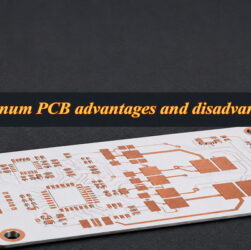
The main aluminum PCB advantages and disadvantages are effective heat spreading and mechanical rigidity versus higher fabrication costs, limited routing …
S/N ratio (Signal-to-Noise Ratio, or SNR) measures the strength of a useful signal relative to background noise, usually expressed in …
Ceramic substrate mounting needs a defined load path, suitable support and a controlled thermal interface. Do not pull a bare …
Medical instrumentation PCB board fabrication requires precise circuit dimensions, stable signal transmission, and consistent manufacturing quality. For diagnostic instruments, patient …
IT180A is the common search form of ITEQ’s IT-180A, a halogen-free, high-Tg FR-4 laminate system developed for multilayer PCBs that …
Tantalum capacitors are polarized electrolytic capacitors used for DC power filtering, local energy storage and supply decoupling. They provide relatively …
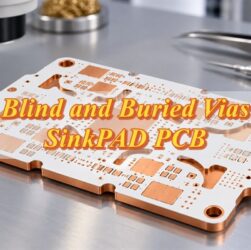
High-power electronics often require efficient heat dissipation and dense circuit routing within limited PCB space. A Blind and Buried Vias …
Electroless copper plating makes an insulating PCB hole wall conductive by depositing copper through a chemical reaction, without connecting the …
A pencil hardness test checks how a cured solder mask resists damage from a prepared graphite pencil. A useful result …